The Villavecchia Foundation reaffirms their commitment to young cancer survivors
We have adhered to the international network PanCare and consolidated our care programs NES and NESI for young survivors.
This International Week for Survivors of Cancer (June 19th - 25th), two members of our technical team at the Villavecchia Foundation (Arantxa de Lara and Matilde Pérez) participated in the international peer visit on young cancer survivors organized by the European Network of Youth Cancer Survivors and the Pediatric Cancer Center in Barcelona where we presented our program ‘No Estás Sol@‘ (NES). The event’s objective was to promote and habituate ethical practices to better the quality of life for young cancer survivors in Europe. Recently, we have expanded on this commitment with our becoming partners of PanCare (a PanEuropean network of Care for Childhood and Adolescent Cancer).
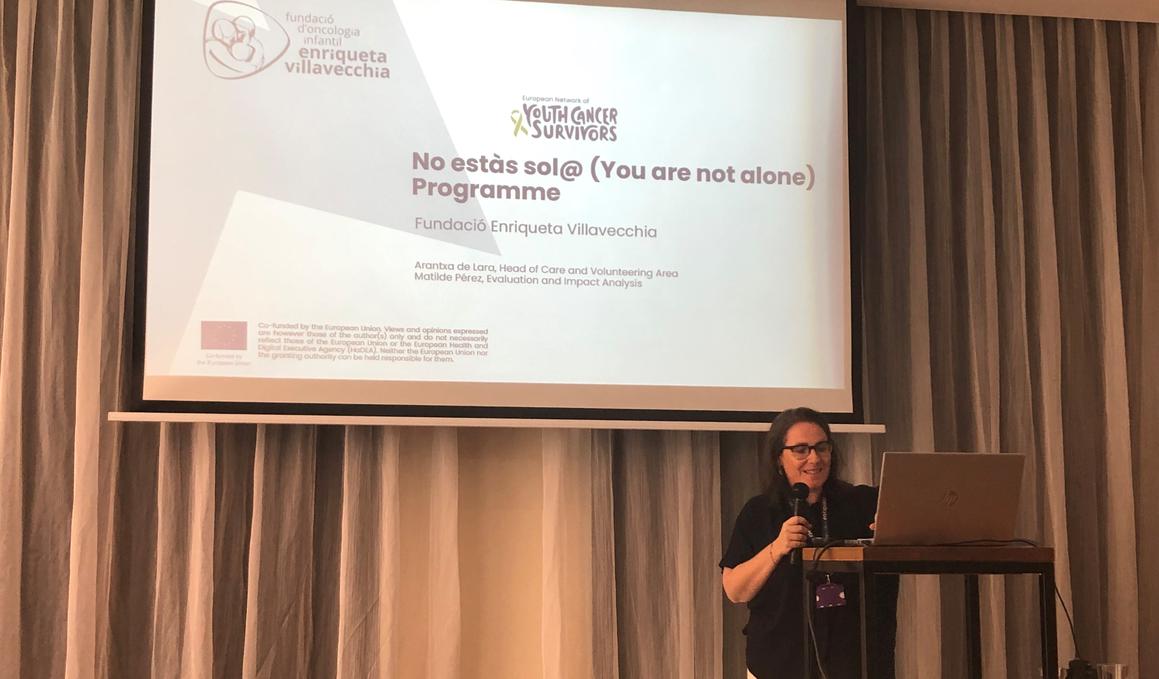 Matilde Pérez presents the Foundation’s program ‘No Estás Sol@‘ (‘You are Not Alone’)
In order to consolidate and expand our care programs for child cancer survivors (NES and NESI), we have established various collaborative connections, like the one we have with the Pere Tarrés Foundation for the organization of the summer house for our young survivors.
’No Estás Sol@‘ (‘You are Not Alone’) (NES) is a program favoring the integral development of adolescents who have survived a case of oncological illness, through the provision of recreational-educational activities. Organized activities range from individual one, group activities, and activities aimed at families. The program’s objectives also includes increasing the participants’ self-awareness and that of others (empathy and ‘self-empathy’); emotional detection, recognition, and comprehension; self esteem; emotional regulation; emotional expression and social adaptation (social and problem-solving skills).
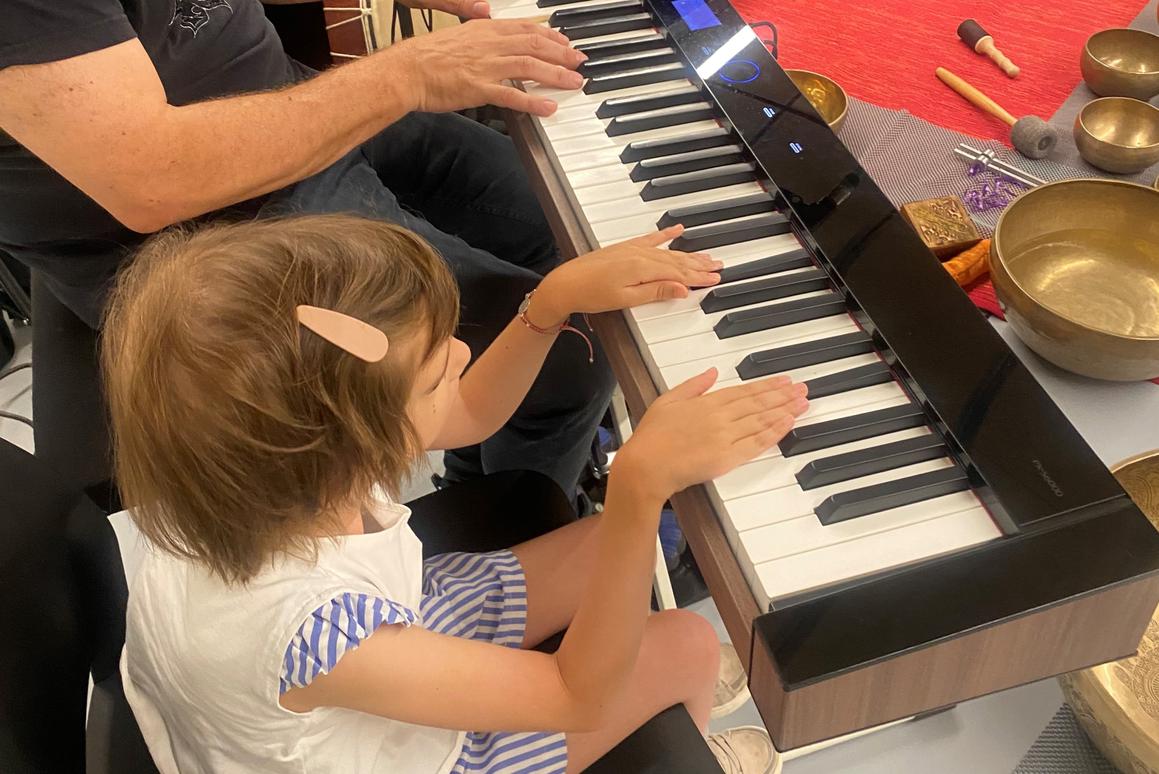 Musical activities with the young survivors in NESI
For our program ‘No Estás Sol@ Infantil’ (NESI), our principal objective is to improve the quality of life for cancer survivors younger than 10 years old, as well as their families’. We favor the socialization of patients and families, strengthen happiness as a basic childhood right, strengthen family relationships with an emphasis on the bond between siblings, and help build these supporting relationships between themselves as well.
More than 70% of young cancer survivors suffer from aftermath effects.
In our country, 82% of children with cancer are able to be cured, but in many cases they suffer secondary effects derived from the illness or treatment. This is why it is fundamental that there exist protocols for continuous long-term care that reduces the possible after-effects and betters the patients’ quality of life.
There is a calculated 70% of childhood and juvenile cancer survivors that suffer from secondary problems including physical, psychological, and psychosocial, with 30% of them presenting a threat to their lives. Some of the most frequently-seen after affects are cardiovascular, endocrine, neurological, ocular, and auditory/renal problems, alongside psychosocial and social ones. Additionally, survivors can face problems entering the workforce, subscribing to an insurance or mortgage. Fortunately, the law of ‘Derecho al Olvido Oncologico’ (Right for Oncological Survivors).
► Helicopter rides and therapy with dogs, new activities for survivors of childhood cancer.