”The Villavecchia Foundation was present in my happiest moments during my illness.” —Marta Briones, child cancer survivor
Participating in our excursions and activities helped Marta meet other young people with cancer and manage her fears and self-esteem. She tells us so 10 years later, completely recovered from the leukemia she once suffered.
Marta is 25 years old, from Barcelona, and is currently working and living in London. She was diagnosed with leukemia ten days before turning 15, in February 2012, and continued treatment in Hospital de Sant Pau. Three years after her diagnosis, normalcy returned to her life: she started University (Administration and Business Management), and took advantage of the opportunity that surged from it, like doing an exchange program in the U.S., volunteering for a company in Perú and a professional internship in Luxembourg. Her passions include surfing and skiing, sports that she has been able to partake in during these years. However, one of the secondary effects that she suffered from her treatment have been various articulation problems, caused by lesions in her ankle and hip. This limited her participation in sports for a time, but after a hip surgery in Hospital de Sant Pau a year and a half ago, she has continued to practice her favorite sports.
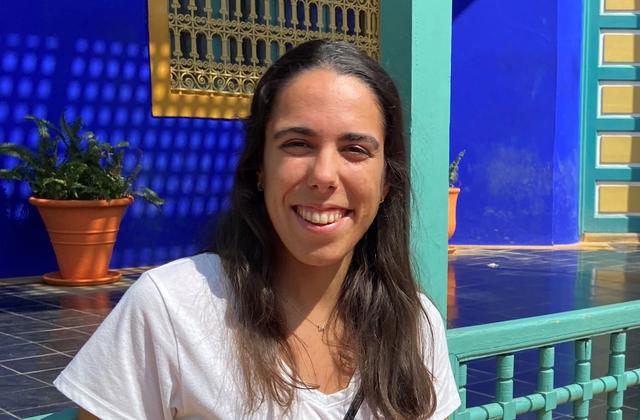 Marta Briones, child cancer survivor
As someone who loves to ski, she vividly remembers her excursion in the snow with other children with cancer. “All of the activities at the Villavecchia Foundation that I participated in were special, but above all was the skiing trip in the March of 2013,” affirms Marta. A partner of the hospital, she also suffered from leukemia, she returned from an excursion to the snow organized by the Foundation in 2012 and shared all that she did that week and all the fun that she had. “From that moment, my dream became the one of participating in the ski trip the following year. I loved to ski! And that objective kept my hopes up whenever I worsened. That excursion surpassed all my expectations, I met other kids in the same situation as me, and made friends that I still talk to today, the ones who shared the experiences of illness.” Marta still remembers the activities of that week: skiing with counselors, traveling on snowmobile, going up the retracks to have dinner in the grounds’ restaurant… “I remember the exchange of all the volunteers and professionals that accompanied us.”
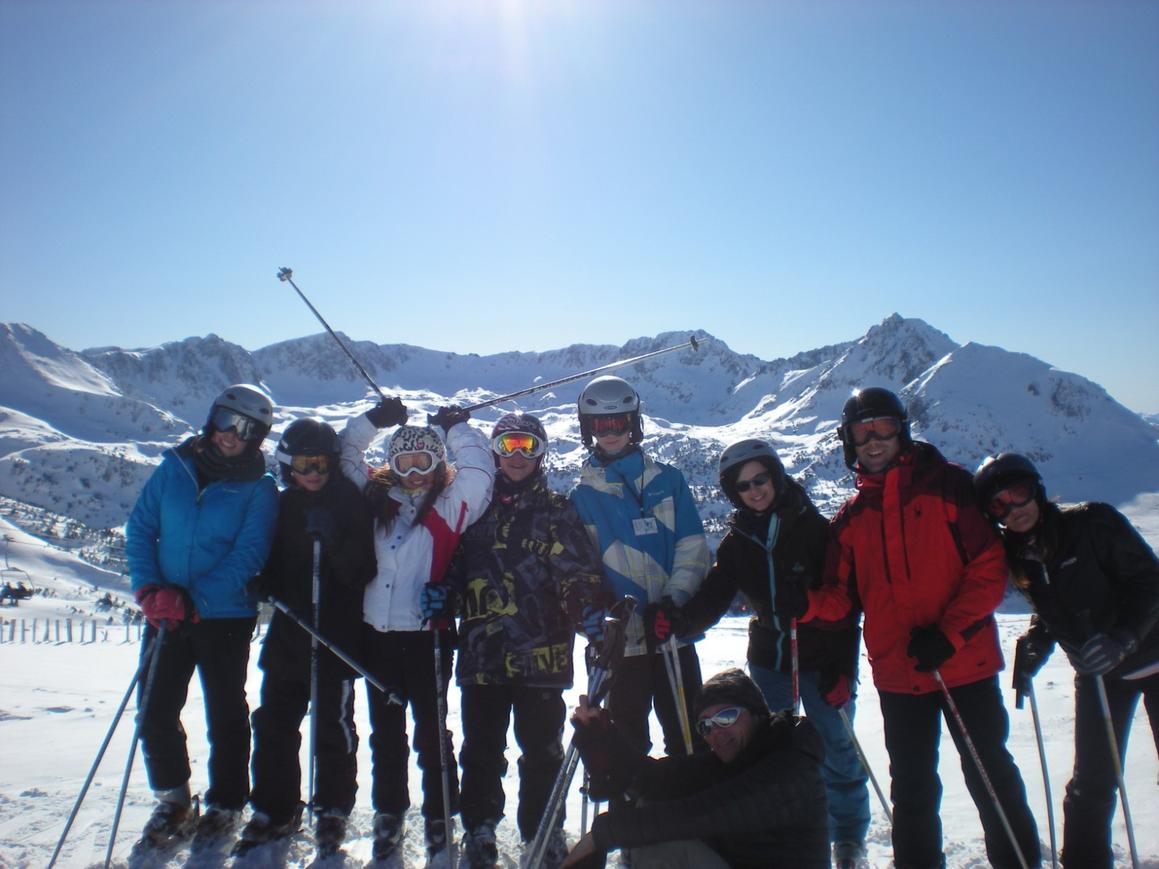 Marta Briones, in the blue Anorak to the left.
Normalizing the illness, being able to talk to other children who were living the same reality as hers, being able to share fears and experiences, and to feel understood were what was most important for Marta. “One of the more fun anecdotes that I remember was the wig exchange between girls. The same wig that I use as my hair in the street or at school was the same one I exchanged with my friends, without shame in showing my bald head. We also compared scars by the Port-a-Cath, —which served to supply medication through a vein injection—and each one of us was convinced that we had the prettiest scar.”
Marta tells us how, in school, she was unable to keep up with her classmates. For example, after class they wanted to play a sport or go out after class, but she would be tired from treatment, and that would make her feel misunderstood and separate from the group. “Excursions with other kids that were sick helped in this sense,” she assures us.
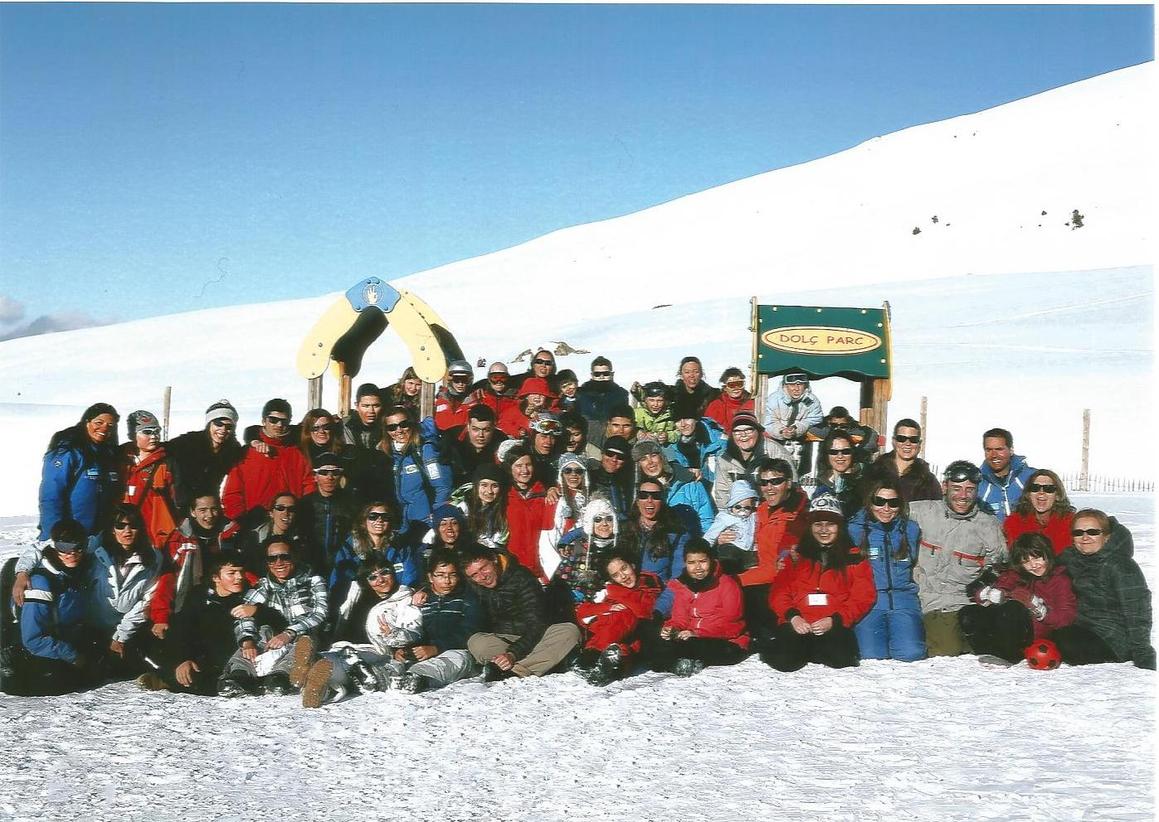 Skiing trip in 2013, organized by the Villavecchia Foundation.
Of her years in treatment she remembers, firstly, the medics, nurses, hospital personnel and the hospital’s teacher: “their professionalism, their close and friendly care helped me feel better during the period of time where I spend my time in bed, isolated, without being able to go out or receive visits.” In the next phases of treatment, when she was no longer isolated, she would distract herself in the play area, “where volunteers from the Villavecchia Foundation did the most so we could have the best time there.”
To a girl going through the same illness as she once did, she would tell her: “This happens faster than you think. One day you will realize that everything has passed, although at the moment it may seem like an insurmountable mountaintop or feeling like time does not move forward.” Marta recommends finding small objectives to keep one’s spirits up during treatment. “For example, I had a list of wishes for my life after I was released from the hospital, starting with eating my grandma’s empanadillas and sleeping on my slide, which I was not able to do since I could only sleep face up due to my catheter.” Trying to take the illness in the best way possible and trying to see the good side of things was her advice: “I had a notebook where I would write down all the funny things or smile disasters that I went through, and I still laugh to this day when I re-read it.”
Mata dedicates some emotional words of gratitude: “I would like to give a thousand ‘thank you's to the Villavecchia Foundation for all the support, that is so professional and caring, to every patient and every family. When we suffer a grave illness, it helps us to connect with other patients and families that are going through the same situation, and to be able to share uneasiness and feel understood, as it is very difficult to find that level of comprehension outside the hospital. And so I encourage the Foundation to keep helping in putting people in contact with each other, through activities like the ski trip or other excursions, and with the help of their volunteer team, many of which are ex-patients or family members.”
Apart from helping the patient, the activities benefit the whole family unit. As Marta explains: The activities organized by the Foundation helped me, but also my parents. Parents live alongside their child throughout the illness and can suffer just as much, if not more, emotionally. The Villavecchia Foundation was present in my happiest moments during my illness, and this has influenced my mom wanting to help other children and families in situations of illness, signing up to be a volunteer at the Foundation.” Thank you so much to you both!
► Help us maintain these excursions and care grams for children and their families through a donation or becoming a partner of the Villavecchia Foundation here.