¨The smiles of the sick children in these photographs say, ´We have done a good job´
Isabel Albendea joined the Foundation in 1996 as a social worker. In this interview, she tells us about lived experiences and what they represent for her to work 28 weeks accompanying children with cancer and other grave illnesses.
When she entered the Villavecchia Foundation, Isabel was much more than only a social worker. She was also coordinating activities of children and young people who had illness, one of the pioneering programs of the Foundation, which has its origins in the first organizations of camps for children with Cancer in Cataluna, in 1988.
¨We should thank the parents who put trust in us, trusting us with their sick children and letting us take them on trips like Andorra and Paris…All these activities have been an incredible gift and I've conserved all of these memories. We have taken children who are very ill to go skiing. Some have died a week after coming back home. This emphasizes how we´ve helped them take advantage of those last days of life. While they enjoy the activity, they do not think about their pain, and instead enjoy life. We always do this through medical authorization, of course, and in coordination with hospitals and families.¨
In her initial time as social worker at the Foundation, Isabel worked at Vall d'Hebron three days a week, a day at Hospital Germans Trias i Pujol, and another day she coordinated with the social worker at Sant Pau. ¨But to participate in activities with kids allows us to see the other face of illness. To me, I do not like theme parks in the least, but I have enjoyed taking the children to Disneyland Paris or to PortAventura many times, seeing their smiles, watching them play and be happy, because that is what it means to be a kid; to be able to play and laugh, despite the illness. And I have enjoyed as much as they have in these activities. We have gone from the Pirieno to the delta of Ebro, we have accomplished international trips, always accompanied by volunteers and medical personnel, and it has all been a great learning opportunity. The smiles of these sick children in all the photographs say, ´We have done a good job´. It´s what fulfills you the most.¨
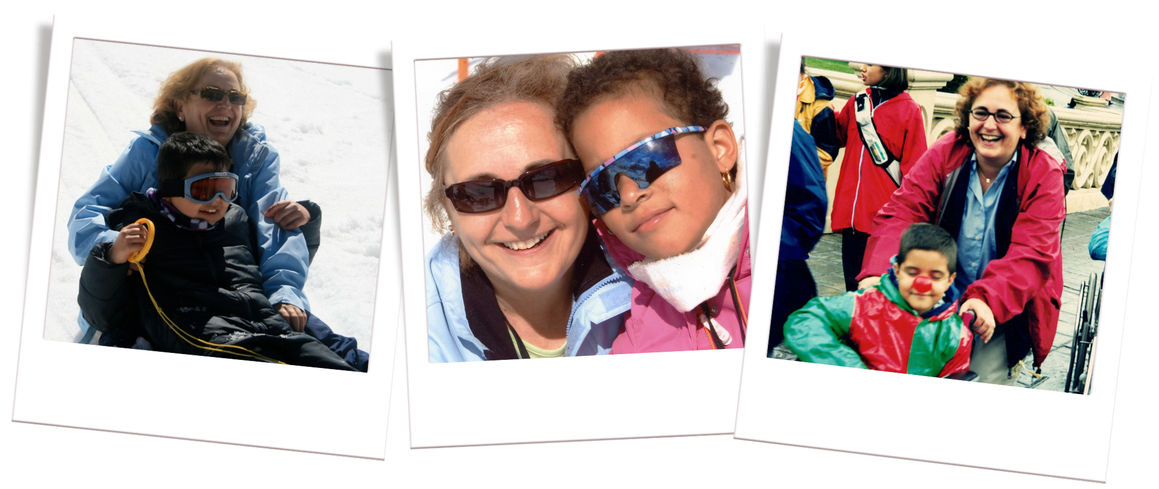 Isabel has accompanied hundres of children to Andorra and Disneyland Paris
¨These children and families have taught me so much. Above all, they have taught me to know how to enjoy life day to day. Today we are here, tomorrow we won't know what will happen to us. Working with suffering and pain, and having to be the work partner of death for such a long time, all changes your values. You will value the small things, take advantage of the fact that you are okay. This is something I learned from everybody. It is a constant lesson.¨
Isabel has helped this year in the process of the digitalization of the Villavecchia Foundation´s photographic records. ¨It has all been an experience, because myself and technology are not good friends, but I have participated in the scanning in good faith of the images' archival. It covers the history of the Foundation from the day it was founded, in both document and photographic archival. It has been a sweet experience, albeit somewhat sour, with the photographs including many memories, you see the children and young kids who we have lost on the journey. And that touches you. It is very difficult to say goodbye to a child.¨
¨In some way, as you keep looking forward, you need specialized therapy support, as we professionals also need to take care of ourselves.¨
¨After many years, looking at photo after photo, you become more conscious of all the changes that have been implemented. Many changes. Necessary ones, I believe. At the time, medicine was not what it is now. Many of the children who died did so due to the toxicity of chemotherapies. Many isolated children in closed off rooms where family could rarely visit, and only during certain hours… many things have changed. It did not have many social resources either.¨
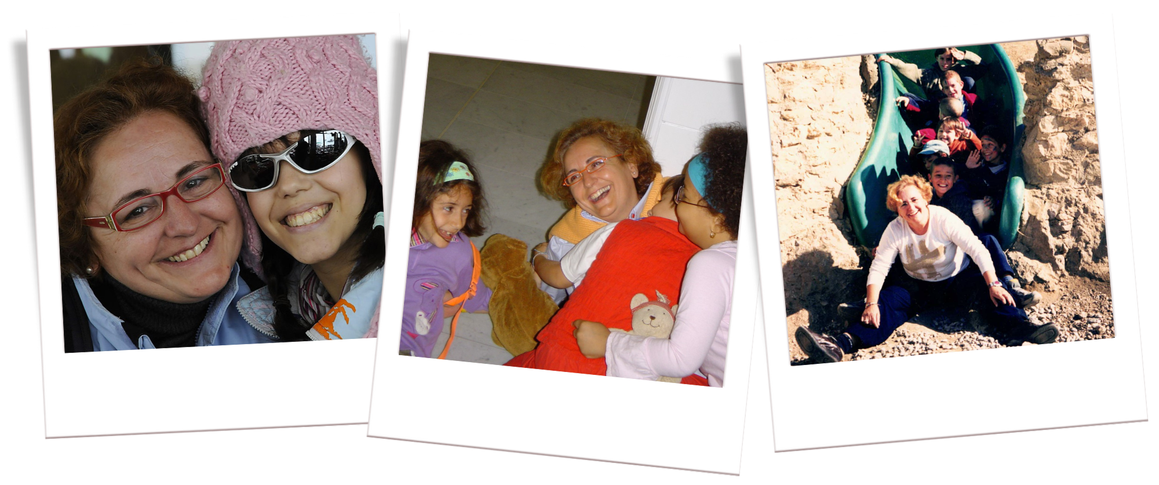 Isabel Albendea in various photographs of activites at the Villavecchia Foundation
When we talk about social work, Isabel assures us that the field has changed a lot since the ´90s. ¨It´s nothing special. Before, generally, we worked with families in another way, there was much more listening and companionship throughout the process, from diagnosis to the final treatment or final day of life.¨
She tells us that even the assignments at a social work level have changed significantly. ¨Social work that is studied nowadays focuses more on the transmission and management of resources. It is a type of social work that I do not like. The whole process of companionship and values have changed. You should be able to sit calmly and actively listen, to fully understand how to divide and conduct a family interview, create a space where people can express themselves, cry, respect their silence, and I think that has all been lost. Companionship is the bare minimum in giving a family what is necessary in their most difficult moments, which is something that has been communicated with the rest of the team of social workers at the Foundation.¨
¨The social worker should accompany this family during the whole process and aim to better the quality of life of families that face an unexpected diagnosis of childhood cancer or another grave illness. The companionship component, for me, is the most important.¨
In the Villavecchia Foundation, all the labor of social work is realized in collaboration with the principal hospitals who provide pediatric care. ¨There is an aspect of direct intervention that is present in the hospitals of Vall d´Hebron, Sant Pau, and Germas Trias, where we have social workers from the Foundation. In other hospitals (Sant Joan de Deu and Parc Tali) we intervene in an indirect manner, making efforts pertinent, be it accommodating housing, activities, financial help or other.¨
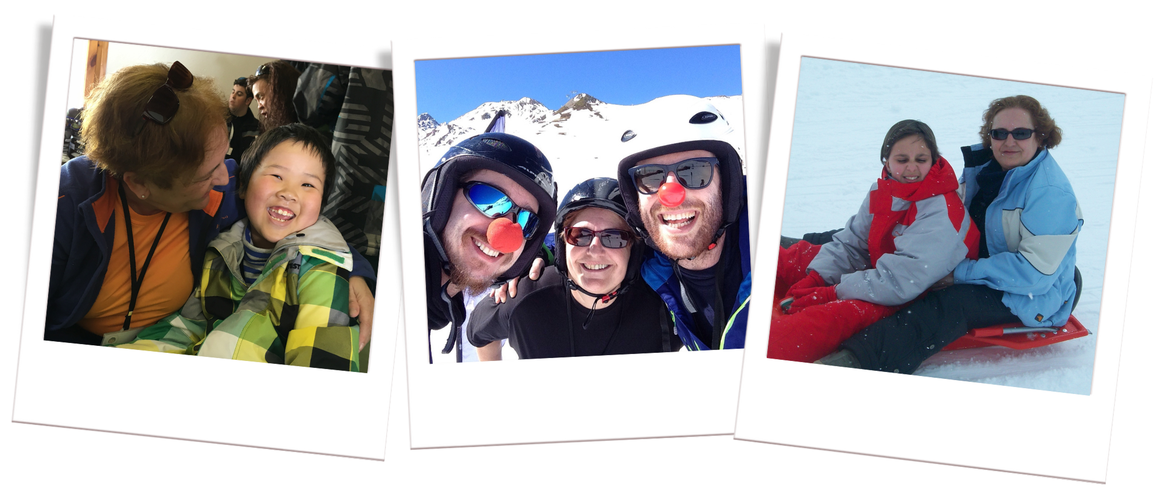 Isabel was in charge of the organization of the Week in the Snow
Out of all that Isabel has lived through at the Foundation, she especially remembers the housing intiative for children with cancer originating from Ukraine, in a moment where no one was expecting a war in the European continent.
¨It was very hard. There were many of us dedicated full-time to Ukrainian families, where in many cases consisted of mothers alone with their gravely ill children, having husbands and other children in a country in war. There had to be much coordination, accompanying them to hospitals, finding them a place to stay, helping them with formalities and management, offering them emotional support…The most difficult was the big language barrier, which we were able to surpass with the help of many volunteers and the help of digital translators. We helped them in any way we could, including, once treatment ended, helping some families return to Ukraine.¨
In the final stage of her professional career, Isabel finds necessary the creation of a center like the one being championed by the Villavecchia Foundation in the Recinto Modernista of San Pablo: The Pabellón de la Victoria (Victoria Pavilion), which will be the first children´s hospice in the country. ¨It is very important to make a space that allows families to rest. We have found many cases of parents that are physically exhausted, emotionally, that need time to rest, to manage responsibilities, recharge batteries, in order to continue care for their children. These families are carrying a lot and it is necessary to have a space where they can leave their child for a few hours, a space that offers them safety, and have time to rest for a bit. I don´t understand how we have not had a resource like the Pabellón de la Victoria before this. There are similar care centers for adults, but not for children.¨
She considers the project as ambitious, ¨but it is something that has always been done by the Villavecchia Foundation since the beginning of their establishmentÑ to detect a necessity and attempt to provide a solution to it, as can be seen through their championing pediatric palliative care in Cataluña. I hope and wish that this hospice be the first in many that will open throughout the country.¨
Isabel will always carry the many families, children, and adolescents that she has met. ¨When the sick are children, the bond is strengthened with the parents. With adolescents, however, the bond is more personal. Young adolescents hold a lot of information that they do not share with their parents. A lot. In some cases, they do not want to worry their parents or make them suffer, and they share with you their fears, and to the professionals who they get close to. Now, in many oncohematology teams there are psychologists. When I started, there were none, and it took many years for them to be included. Before you were their psychologist too. Listening to them, accompanying them, you helped them be less afraid…¨
¨I will leave with all of this; their words, their smiles, all of the lived experiences that I have, all the photos that I have memorized, all the experiences…No one can take them away from me.¨
Thank you, Isabel, for the many years dedicated to caring for children, adolescents, and families in their most difficult moments.