”Survivors of childhood cancer stay in a type of limbo…They don’t receive enough support.”— Pilar Garcia, mother of Emma Gómez, participant of the NESI program
Families require more help after treatment, and this is what the Villavecchia Foundation offers with their NES and NESI care programs for children and youth who have survived a form of cancer.
82% of children with cancer are able to survive, but many suffer from the after-affects of the illness, and do not have access to the necessary therapies or do not have an adequate alternative treatment.
“We have been lucky to participate in the Villavecchia Foundation’s NESI program, but I do believe that survivors of childhood cancer remain in a type of limbo in between an ill state and one that is not. They don’t receive enough support,” is the opinion of Pilar Garcia, mother to Emma Gómez, a young girl suffering from the “sequels” of the cancer illness she’s suffered.
“The NESI program has helped us a lot in socializing and relating to other children in a similar situation as hers. To Emma, with her limitations, it’s more difficult to play with other children, but she feels included in this group,” Pilar explains.
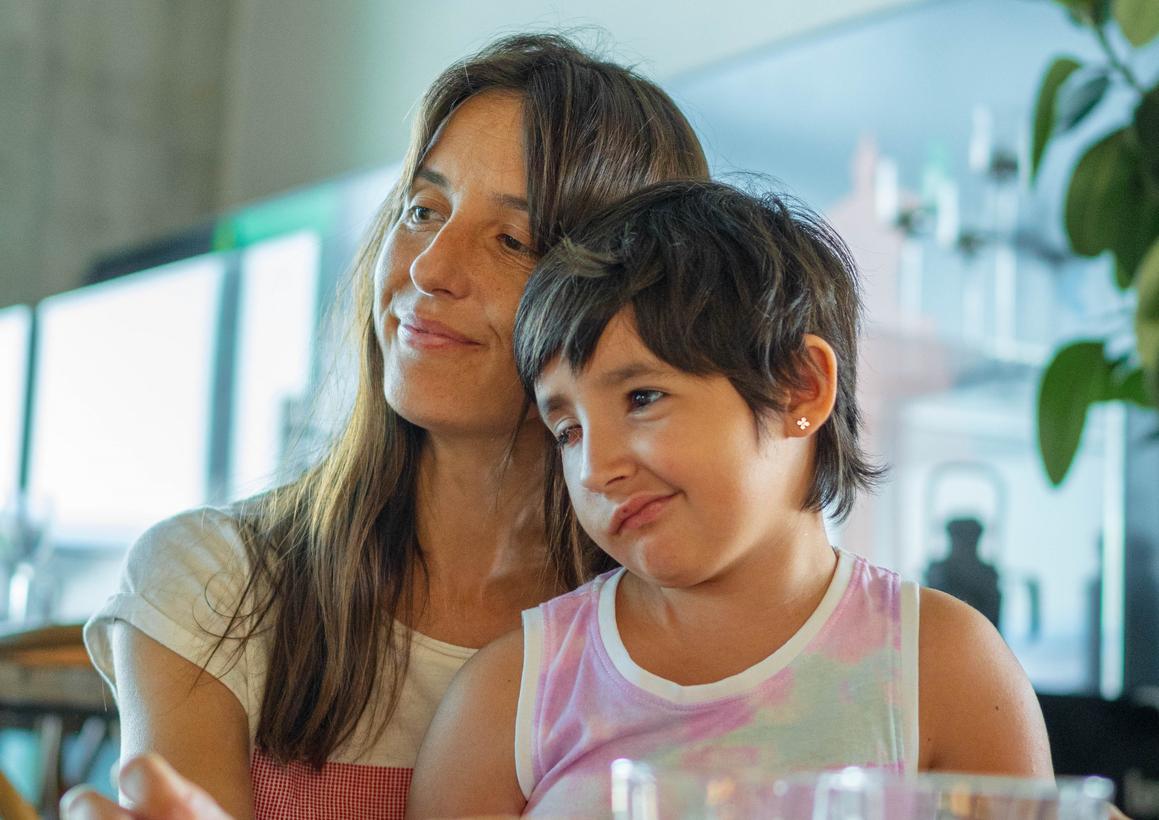 Pilar García and her daughter Emma in one of the Foundation’s activities
The Villavecchia Foundation, apart from partaking in the research on childhood cancer and the respective formation of a medical team, are also committed in offering care for children and adolescents who have beaten cancer during their childhood and are now suffering from physical and psychosocial after-effects. The NES (‘No Estás Sol@‘; ‘You are Not Alone’) program was first created with young survivors, and subsequently the program NESI (‘No Estás Sol@- Infantil’ ; ‘You are Not Alone - Children’) was instituted, helping those below 10 years of age, and in which Emma Gómez and her family participates in.
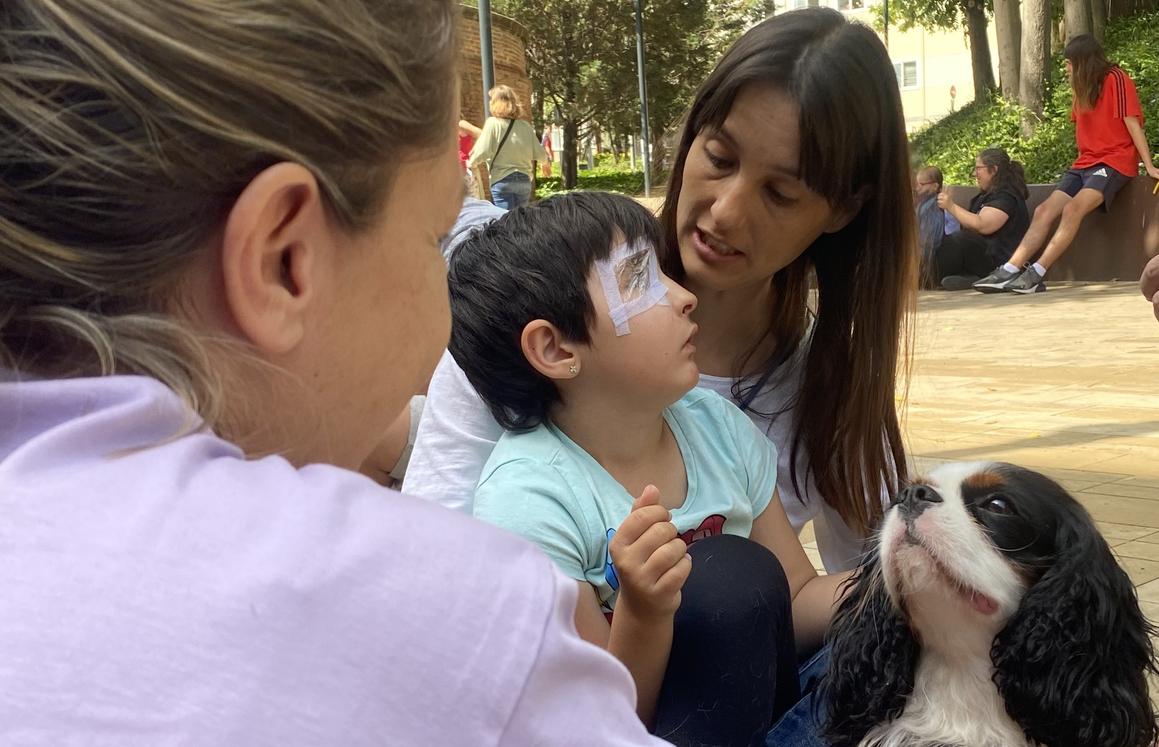 Therapy with dogs, part of the NESI program.
“We only have words of gratitude,” Pilar expresses. “We believe that the team at the Villavecchia Foundation has done an incredible job. It is a shame that this care that we have received is not in accordance with our administration, and so the help for childhood cancer survivors does not come stipulated or filed. So this program still contains a lot of merit, because the Foundation keeps in consideration extenuating circumstances, and ensures that certain situations do not worsen with an additional charge.”
Out of all the activities that this family, helped by the Villavecchia Foundation, has participated in, “the most impressive one has been the weekend getaway, where I think Emma loves to participate in the cooking workshops in Cookiteca,” affirms Pilar. “Our feedback is very positive. It has helped us see how the things that affect you also affect other families, being problems more common than they seem. You also discover therapies and resources that otherwise you wouldn’t have known about.”
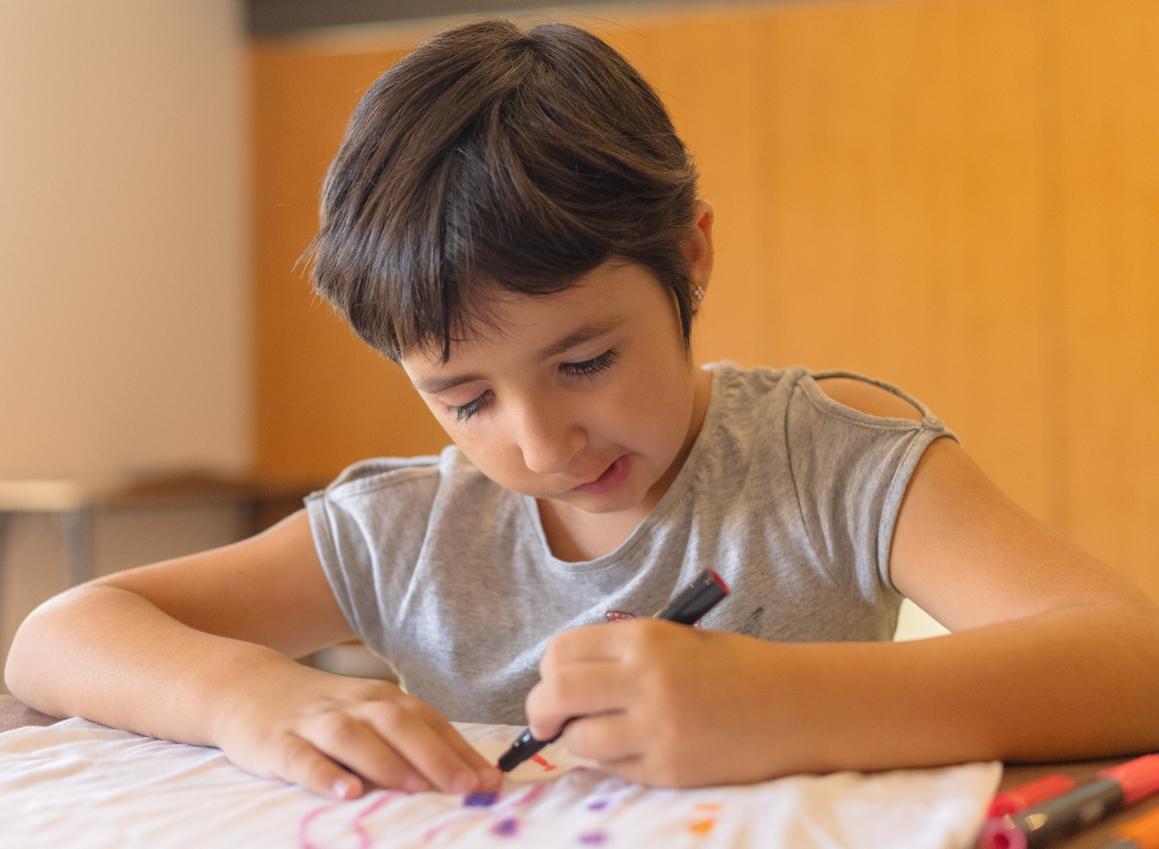 Emma drawing during an activity from the Villavecchia Foundation
The experience in participating has benefited the whole family positively, including Emma’s older sister Anna: “I believe she benefitted from it, because up until now she only saw the inconveniences of her situation (for example, being unable to go to certain places, or different treatment)”. These are several of the collateral consequences of childhood cancer: “It is a difficult period in which it is necessary to center yourself day to day and aim for short-term goals. If there are people who don’t make you feel comfortable (because they express pity or shame), you should distance yourself from them. You have to be strong and center yourself in what is actually important. Rest can wait,” Pilar shares.
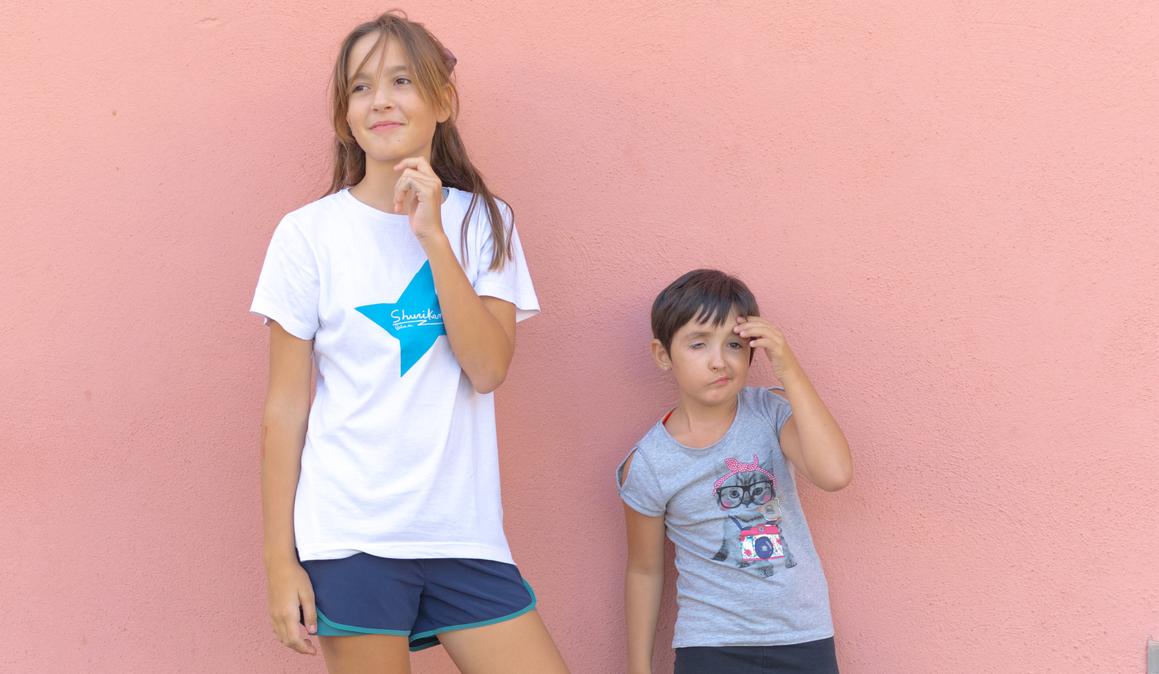 Emma (right) with her sister Anna
► If you are interested in offering an activity for our young cancer survivors and their families, do not hesitate in contacting us!